


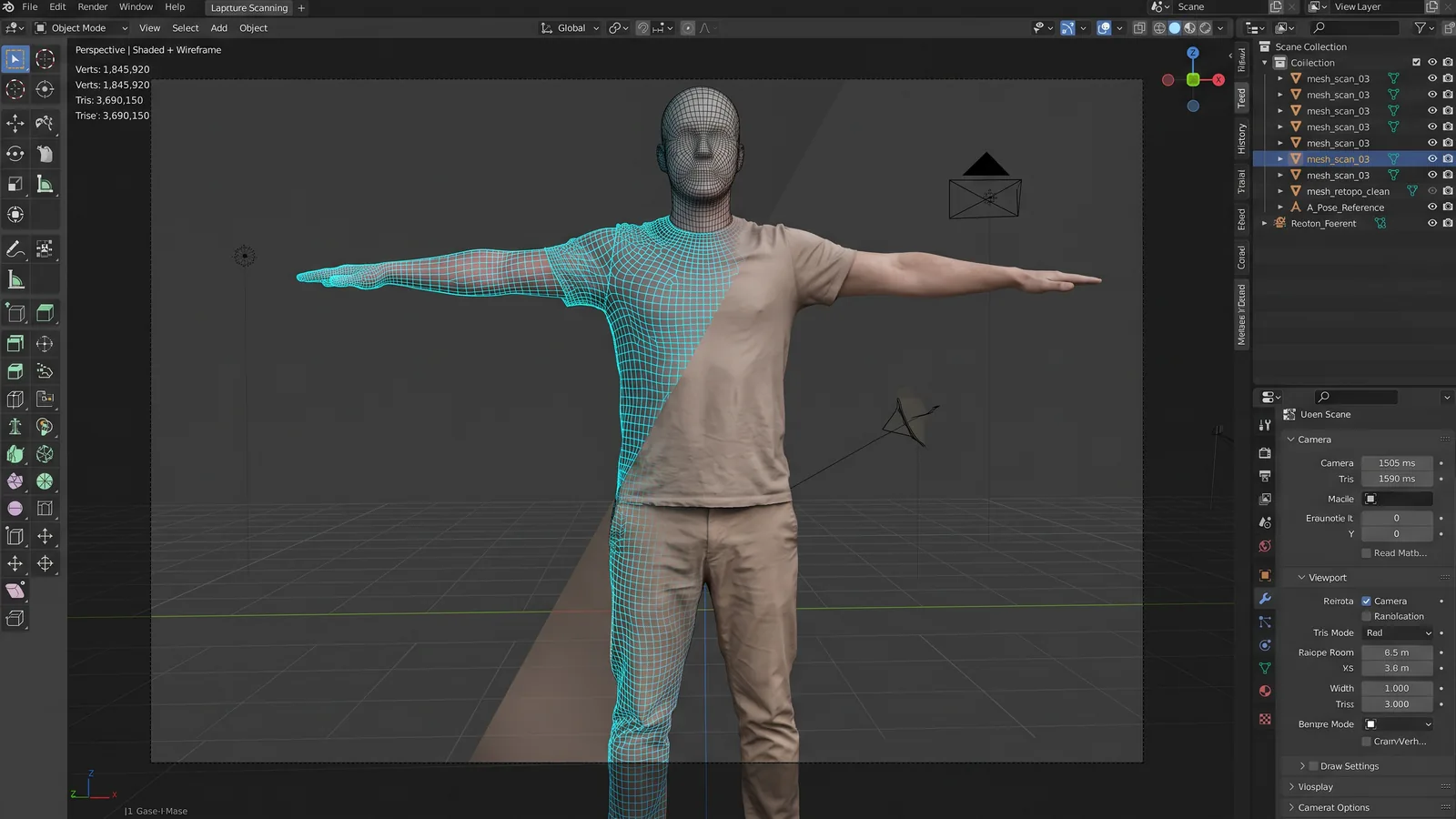
Nude and minimally clothed 3D models serve a specific set of production purposes. Character riggers use them as base meshes. Medical illustrators use them for anatomical reference. VFX artists use them for cloth simulation rigs, where the underlying body geometry drives how fabric behaves. Fashion designers use them as fit models.
None of these uses is unusual. All of them have specific requirements for what the model needs to do well.
Where nude 3D models are actually used
Character design and rigging. A nude base mesh is the starting point for a costumed character. The rig is built on the unclothed figure, clothing is modeled or simulated on top, and the base geometry drives deformation at joints. If the base mesh has bad topology at the shoulder or hip, every costume built on it will have problems.
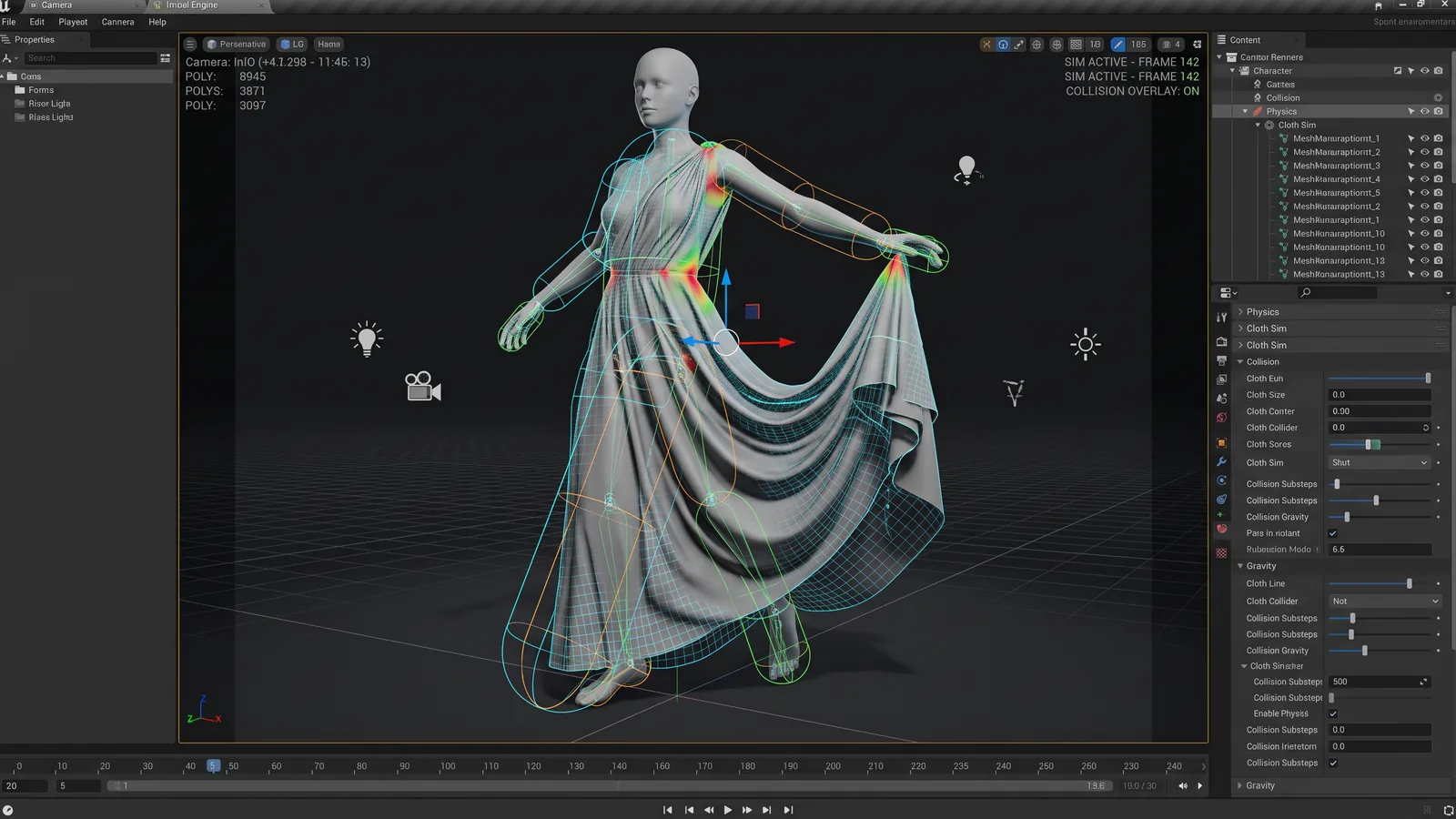
Cloth and softbody simulation. In game engines and VFX, cloth simulation requires a collision body. That body is typically a simplified nude mesh derived from the character. The simulation software needs clean, watertight geometry with no overlapping faces.
Medical and scientific visualization. Anatomical illustration, surgical planning software, and medical education all require accurate human geometry. These applications have no tolerance for approximated proportions.
Underwear and swimwear rendering. Fashion and retail renders for underwear and swimwear require the underlying body to be visible at the edges of garments. A model wearing a swimsuit must have accurate geometry at the hip line, armhole, and neckline.
Life drawing and proportional reference. 3D figure references for artists and sculptors are a significant use case. The model needs to accurately represent real human proportions, not idealized or exaggerated forms.
What photogrammetry gives you that modeling does not
The core problem with hand-modeled nude figures is idealization. Modelers, whether consciously or not, tend toward symmetry, smooth surfaces, and proportions derived from artistic tradition rather than population averages. The result is a figure that reads as artificial because real bodies do not look that way.
Photogrammetry captures a specific person. The asymmetries, the skin texture variation, the subtle weight distribution — all of it comes from observation, not construction. For uses that require believability, this is not a minor difference.
Skin texture at resolution. A scanned figure carries captured skin detail — pores, micro-wrinkles, subsurface variation — at resolutions that cannot be convincingly hand-painted. At close render distances this becomes the determining factor in whether the figure reads as real.
Accurate proportions. A scanned figure has the proportions of an actual person of a specific age, build, and height. For medical applications this is not optional. For character design and life drawing reference it is a significant accuracy advantage.
Natural surface variation. Real human surfaces are not uniform. The geometry varies in a way that hand-modeled figures rarely capture correctly. Scan data preserves this variation.
Mesh quality: what actually matters
For nude models used as base meshes or collision bodies, topology matters as much as texture.
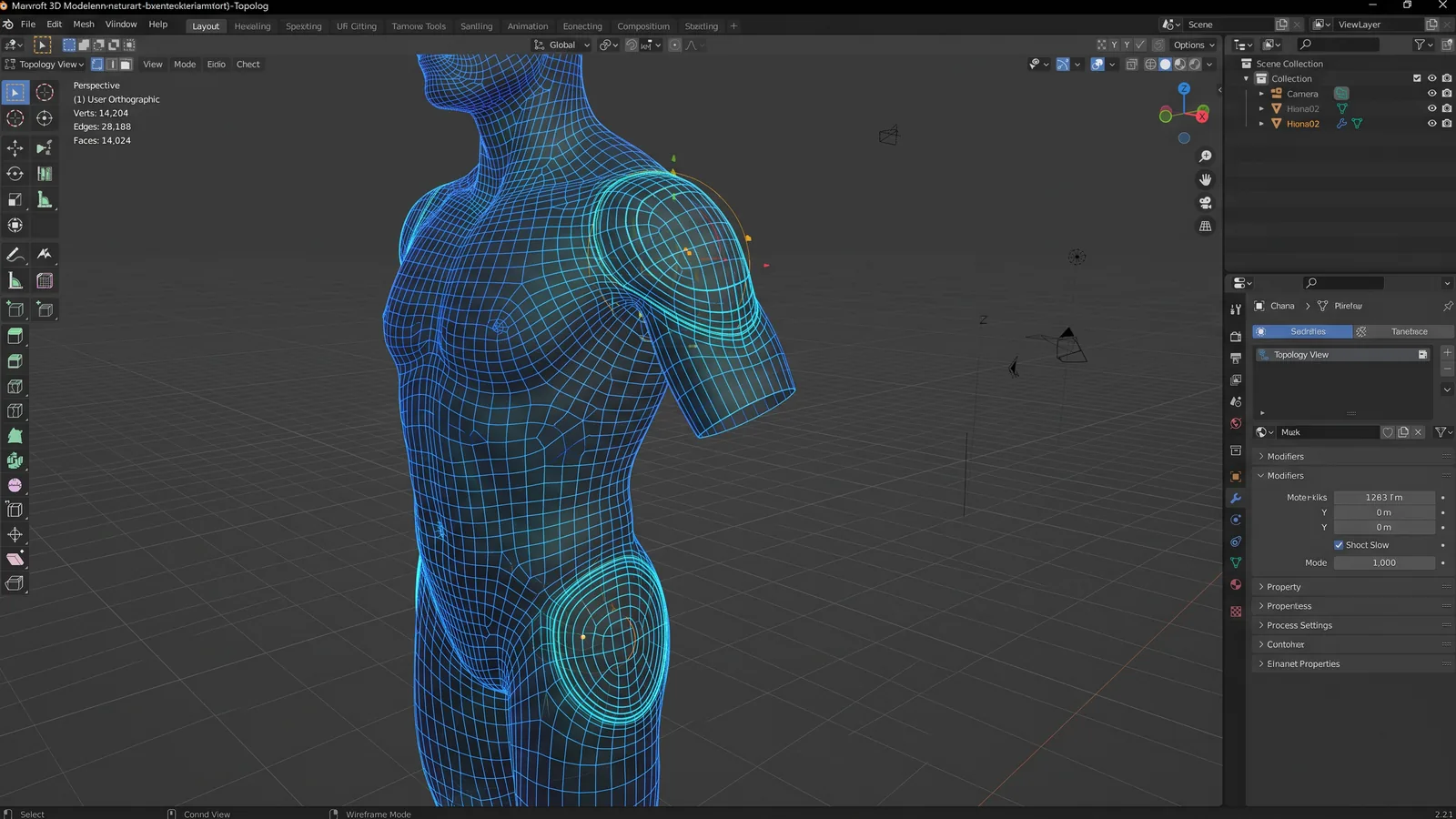
Edge loops at joints. Shoulders, elbows, wrists, hips, and knees need edge loops that follow anatomical structure, not arbitrary subdivision. A poorly looped shoulder will collapse when the arm is raised.
Polygon density. Too low and the silhouette breaks in close renders. Too high and the mesh is unusable as a real-time collision body. Most production workflows want a medium-resolution mesh (20,000–80,000 triangles) with a high-resolution texture, not a dense mesh.
Watertight geometry. For simulation and 3D printing, the mesh must have no holes, no duplicate vertices, and no inverted normals. Many scan outputs require cleanup passes before they meet this standard.
Clean UV unwrap. Texture application, baking, and re-texturing all depend on a usable UV layout. Models with overlapping or distorted UVs require significant rework before they can be used in a pipeline.
Formats and pipeline compatibility
Nude and undressed models are used across a wider range of tools than most 3D assets. The format requirements vary accordingly.
OBJ. Universal exchange format. No rigging information, but clean geometry for reference, printing, and baking. Supported everywhere.
FBX. Required for any pipeline that includes rigging or animation. The format carries skeleton data, skin weights, and blend shapes in a single file.
STL. For 3D printing use cases. The printer requires a watertight mesh with no internal geometry. STL strips everything except surface triangles.
GLTF/GLB. For real-time use in Unreal Engine, Unity, or web viewers. Increasingly common as the game and architectural visualization pipelines converge.
Coverage diversity
A nude model library that covers only one body type is a liability. Production needs span ages, builds, and body types that reflect the actual range of people.
For medical and educational work, age-accurate geometry matters. A geriatric anatomy model and a young adult model have meaningfully different surface characteristics. Using the wrong one produces inaccurate reference.
For fashion and retail, the range of bodies for which garments are designed has expanded significantly. A library limited to a single idealized body type does not serve the range of modern apparel work.
For arch viz and lifestyle rendering, demographic accuracy requires coverage across ages and builds. A family scene with four figures who are all the same body type reads as synthetic regardless of render quality.
What to check before licensing
Before purchasing a nude or undressed model for production use, verify:
1. License scope. Commercial licenses for nude figures sometimes carry restrictions on the type of use or distribution. Confirm that your intended use — character design, medical illustration, fashion rendering — is explicitly permitted.
2. Mesh cleanliness. Request a polygon count and ask whether the mesh is watertight. Scan-derived meshes often require cleanup that takes significant time.
3. Texture resolution. For close-range renders, 4K textures are the minimum. 8K is preferable if the figure will appear within 2-3 meters of camera.
4. Included maps. Confirm that albedo, normal, and roughness maps are included. Scanned figures should also include a displacement map for high-resolution renders.
The Renderbot library covers nude and minimally clothed figures scanned with professional photogrammetry equipment, with formats supporting both still rendering and real-time pipelines.
Comments
No comments yet.