


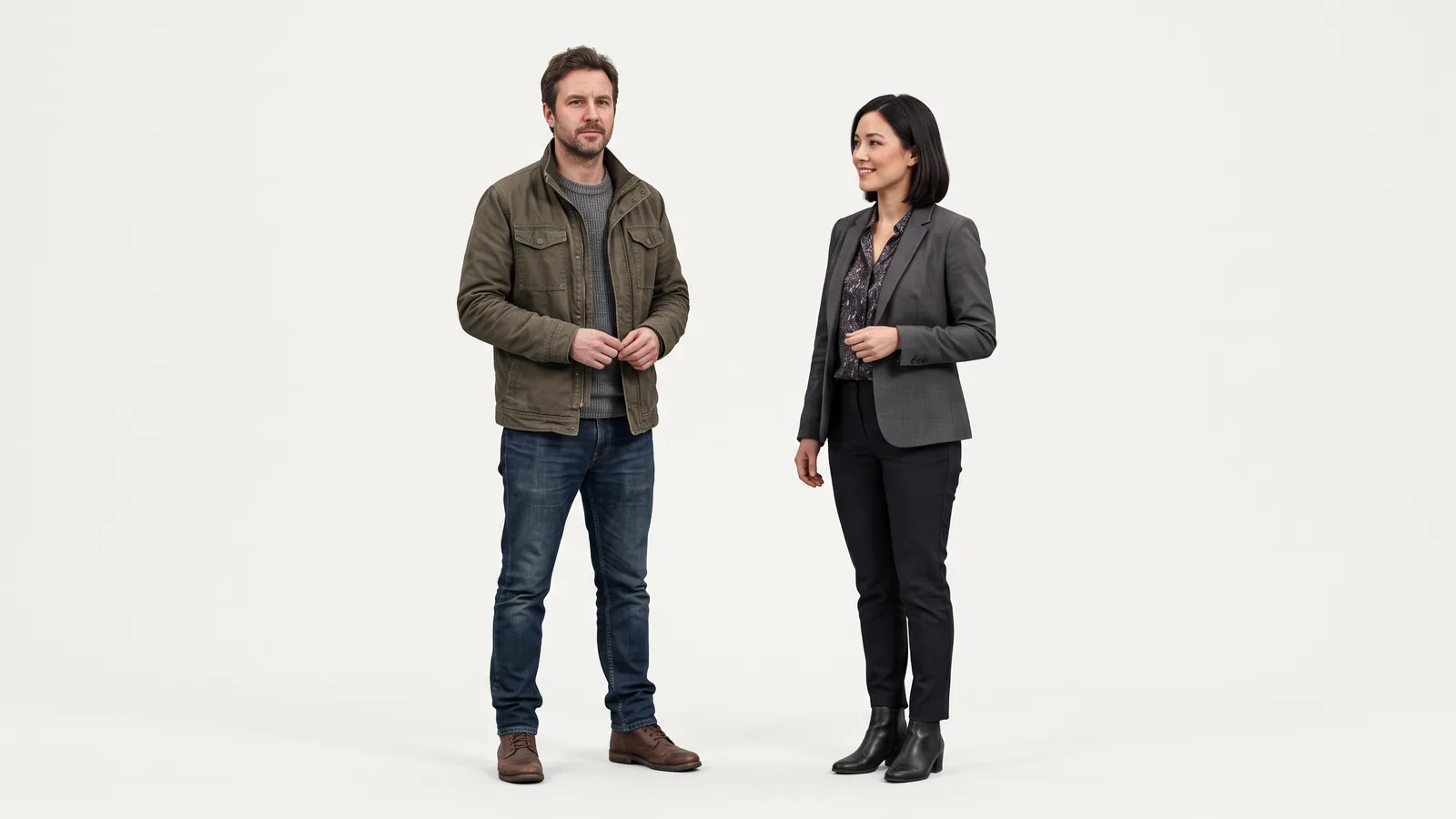
Choosing between male and female 3D figures for your render is partly a visual decision and partly a strategic one. Scale, silhouette, clothing style and the story the render tells all depend on the gender mix you use. This guide covers how to think about figure selection for different types of architectural and product visualization projects.
Scale and Proportions
The most practical difference between male and female photogrammetry models is height and silhouette. An average male figure stands at 1.75–1.82 m; female figures typically range from 1.62–1.70 m. This matters for scale calibration in your scene.
If you use a single figure to establish scale, a male figure will make the space read slightly smaller; a female figure slightly larger. For rooms where you want to emphasise generous proportions — a high-ceilinged loft, a wide-span living room — a female figure at the correct scale subtly amplifies the effect.
Silhouette Reads Differently at Distance
In exterior renders, figures are often small relative to the building. At distance, what registers is not texture but silhouette shape. Male figures typically have a wider shoulder-to-hip ratio; female figures have a visually lighter silhouette. For urban scenes with busy backgrounds, the lighter silhouette of a female figure in mid-ground reads more cleanly against complex facades.
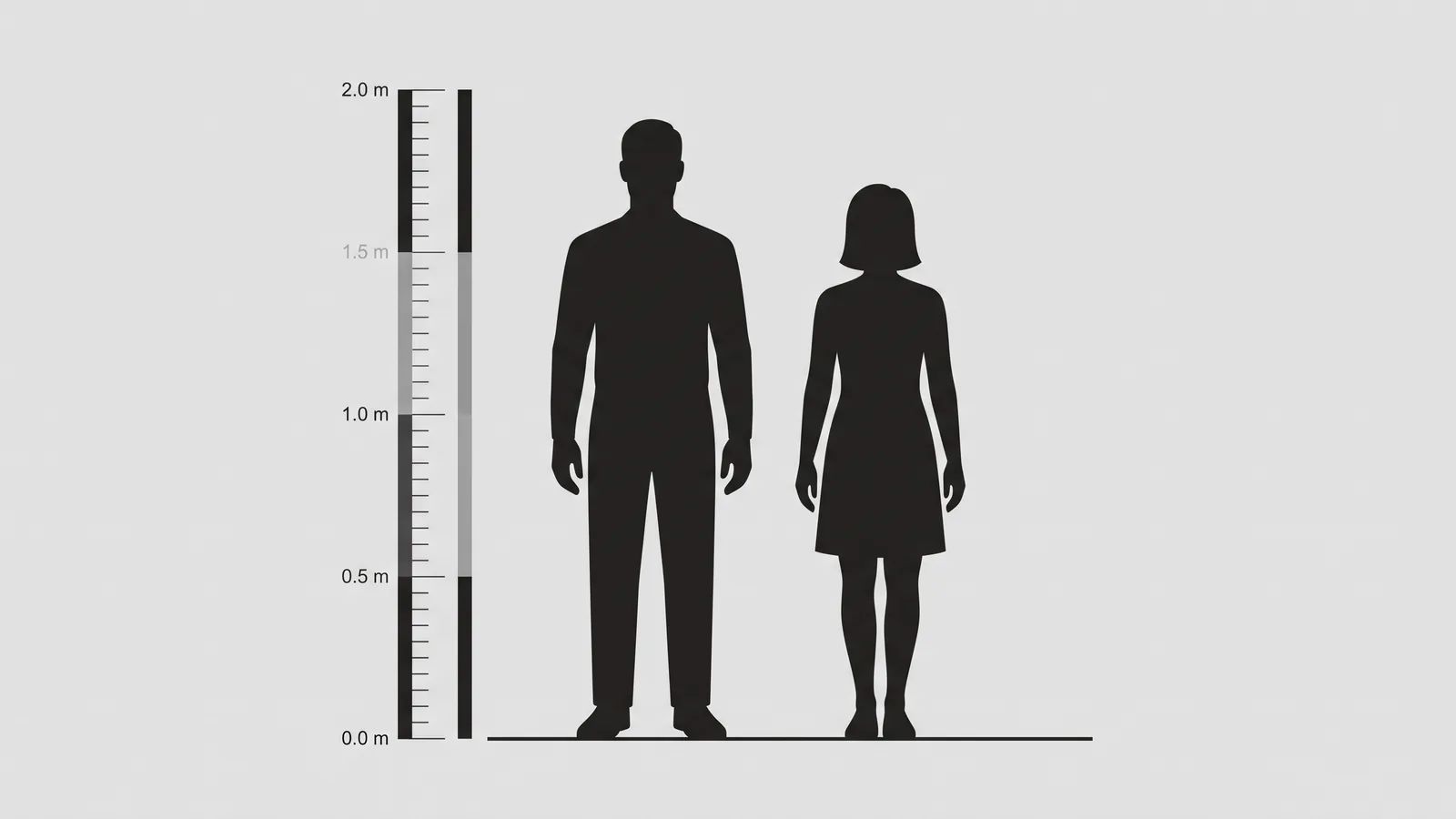
Tip: Render a quick silhouette pass (black figure on white background) before committing to a placement. If the figure blurs into the background, choose a pose or outfit with stronger contrast.
Clothing Style and Scene Narrative
Beyond raw shape, the clothing style of your chosen figure sets the tone for the entire scene:
- Business interior — formal male + female in professional attire communicates a corporate or high-end residential feel.
- Relaxed domestic — casual figures (jeans, t-shirts) work better for family homes and lifestyle-led residential projects.
- Retail / hospitality — a mix of styles mimics the natural diversity of real customers and visitors.
- Premium or luxury — choose figures with fitted, minimal clothing in neutral tones; avoid loud prints or oversized silhouettes.
When to Use Both in One Scene
A scene with only male figures, or only female figures, looks staged. Real environments have a natural gender mix. For exterior renders showing public space, aim for roughly equal numbers, varied in age group where possible. For interiors, two to three figures work: one seated, one standing, different genders.
The Human 3D model collection on Renderbot includes both male and female figures in casual, professional and sport styles, all photogrammetry-scanned for natural texture and realistic proportions.
Specific Use Cases
Residential interiors
A male figure seated at a desk + female figure in kitchen = typical couple lifestyle narrative. Avoid making figures interact with each other unless they are clearly in the same scene and proportionally consistent — mismatched scan sessions can produce subtle scale discrepancies.
Retail and commercial
Use female figures in fashion and beauty retail — this matches the dominant visual language of the category. Use a gender-neutral mix for cafés, hotels, and co-working spaces.
Urban exterior
Vary gender and apparent age. A street scene with six identical male figures at the same scale looks like a placeholder. Use at least three distinct models in a mid-ground group.
Free Male and Female Models to Start With
Renderbot offers free photogrammetry figures in both male and female variants — available after registration. These are full-resolution models with PBR textures, not preview versions.
Summary
- Male figures average 1.75–1.82 m; female 1.62–1.70 m — calibrate your scene accordingly.
- Female silhouettes read cleaner against busy exterior backgrounds.
- Match clothing style to the scene’s lifestyle narrative.
- Use both genders in scenes with more than one figure.
- For luxury renders, choose neutral-toned, fitted clothing in both male and female variants.
Comments
No comments yet.