


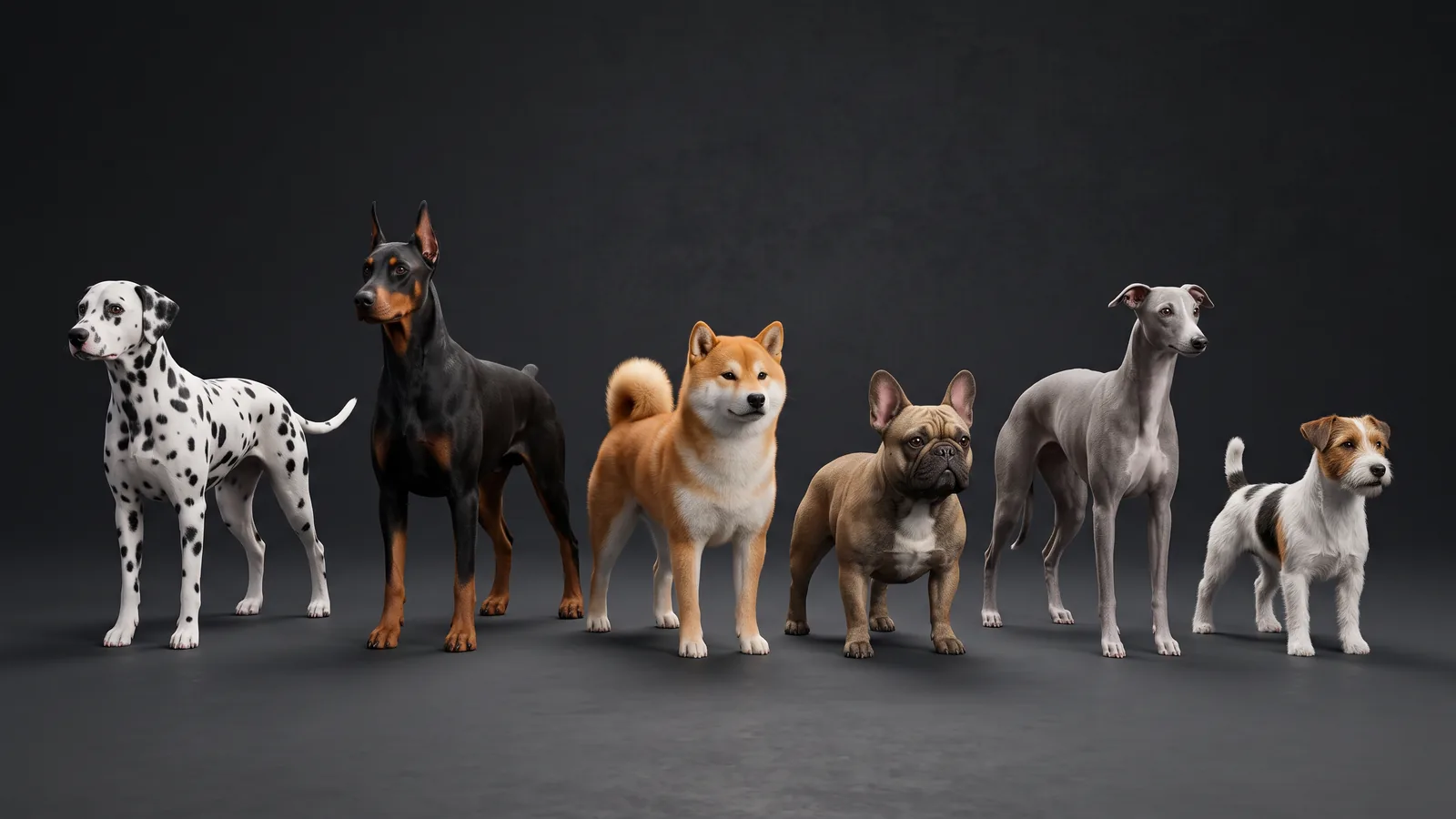
Dog 3D models are used in exterior arch viz renders, game environments, advertising and product visualization, 3D printing, and veterinary education. The breed of the dog matters in most of these contexts — not as a cosmetic detail, but because the breed determines the silhouette, proportions, coat texture, and behavioral associations that make the asset work in the render.
Placing a generic dog model in an exterior scene when the brief specifies a Dalmatian is similar to using a generic car model when the brief specifies a Range Rover. The shape reads differently, and experienced viewers notice.
What makes a breed model accurate
Skeletal proportions. Breed proportions are determined by centuries of selective breeding. A Doberman has a significantly different height-to-length ratio, chest depth, and head shape than a Staffordshire Bull Terrier. A Whippet and a Greyhound differ in muscle mass distribution despite similar overall structure. These proportional differences are the first thing a viewer familiar with the breed registers.
Head morphology. Dog head shape varies more between breeds than almost any other skeletal feature. The brachycephalic skull of a French Bulldog or Shiba Inu is structurally different from the dolichocephalic skull of a Doberman or Whippet. Getting the head wrong makes the breed unrecognizable regardless of coat accuracy.
Coat texture and length. Short-coated breeds (Dalmatian, Doberman, Staffordshire, Weimaraner) need surface texture that communicates the coat without thick geometry. Long-coated breeds (Sheepdog, Malinois) need fur geometry that shows directional flow and length variation.
Characteristic markings. Breed markings are identifying features. Dalmatian spots, Doberman tan points, Bull Terrier color patterns, Staffordshire coat variation — these are part of the model’s identity, not decoration.
Breed-by-breed notes
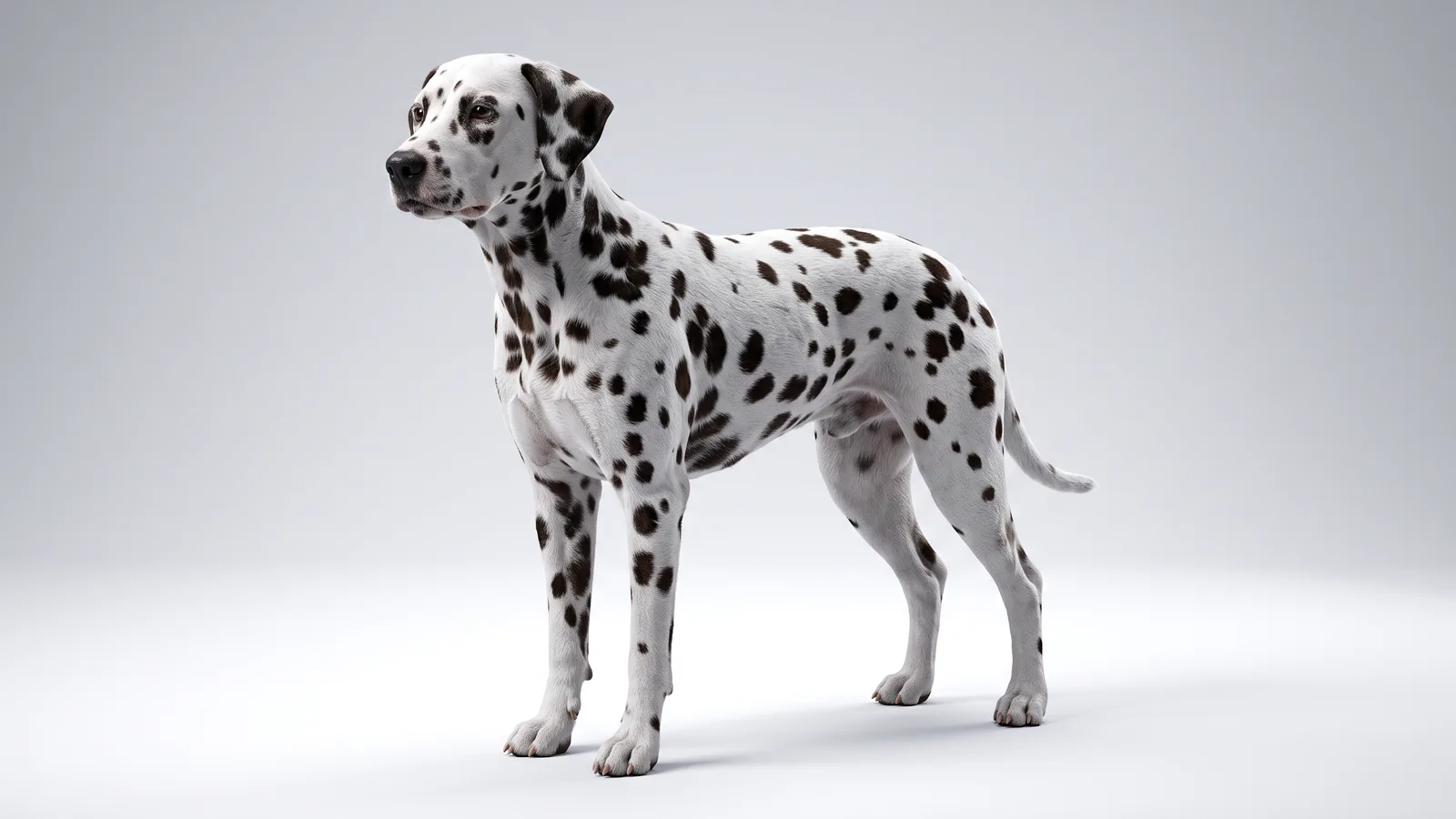
Dalmatian
Medium-large breed with a distinctive spot coat. Proportions: lean, athletic, moderate height. The spot pattern is the defining visual feature and must be irregular and asymmetric to read correctly. White base coat with black or liver spots in photogrammetry captures the actual spot distribution of a specific dog.
Doberman
Large, muscular, with a characteristic lean silhouette and angular head. Tan point markings at the muzzle, eyebrows, chest, and legs. The ear and tail docking practices vary by country and affect what the model should represent. Alert, upright posture is characteristic.
Bull Terrier and Staffordshire Bull Terrier
Both are muscular, medium breeds, but Bull Terriers have the distinctive egg-shaped head with sunken eyes that is entirely unique to the breed. Staffordshires have a broader, more conventional head. Confusing the two is a significant error. Both breeds have short, dense coats that require accurate surface texture.
French Bulldog
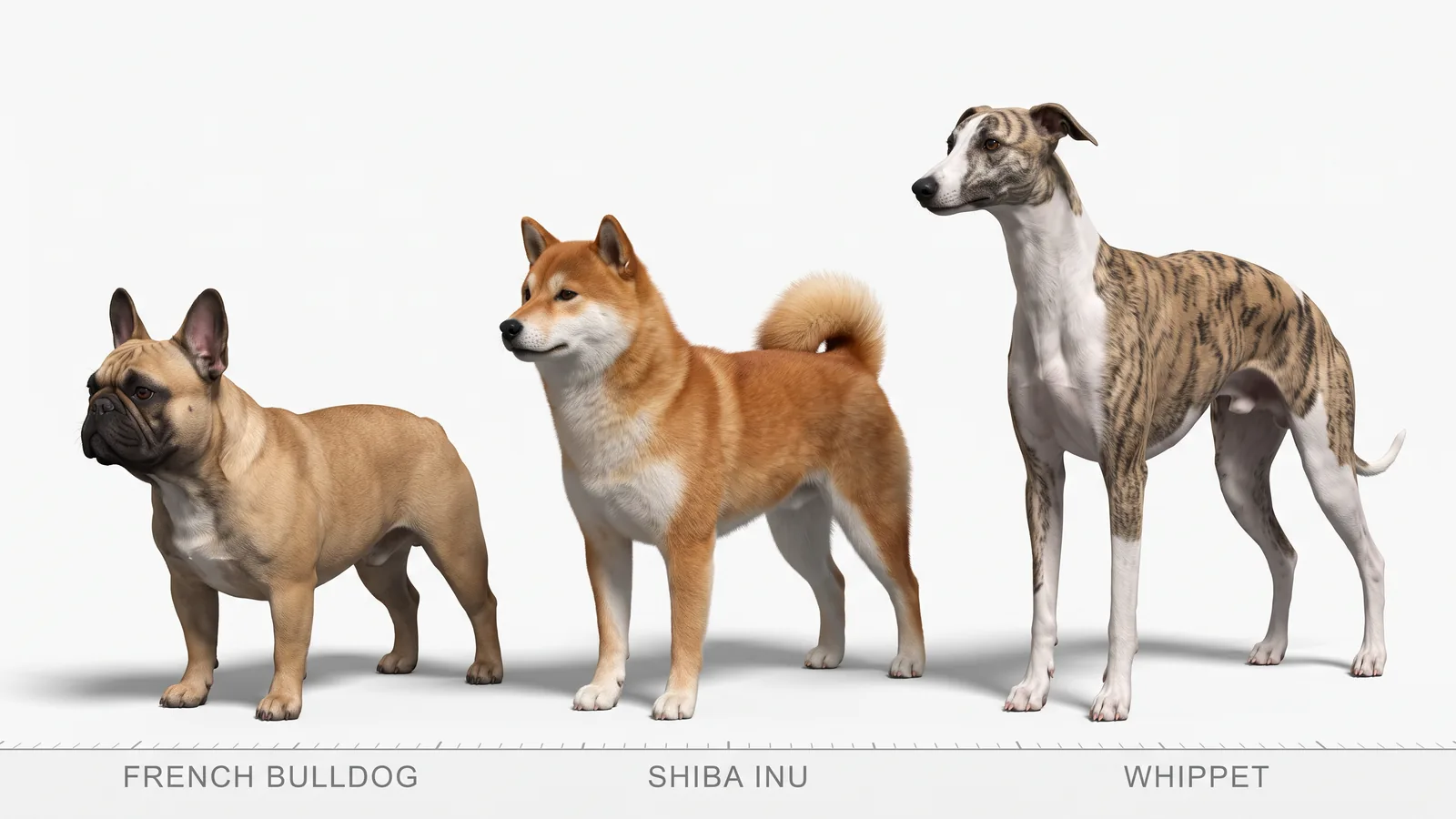
Compact, brachycephalic breed with large bat ears, wrinkled face, and a characteristic rolling gait. The facial structure — compressed muzzle, prominent eyes, skin folds — is the most technically demanding feature to model correctly. French Bulldogs are one of the most popular breeds globally, making accurate models in high demand.
Shiba Inu
Medium-small Japanese breed with a fox-like face, curled tail, and thick double coat. The facial expression — alert, slightly aloof — is characteristic and determined by the head geometry. The coat requires layered texture to represent the double coat’s depth and color variation.
Jack Russell Terrier
Small, energetic breed with highly variable coat types (smooth, rough, broken). The characteristic white body with tan or black markings is a primary identifier. The breed’s compact, athletic proportions should be evident even in still poses.
Whippet
Slender, deep-chested sighthound with extremely lean musculature. The Whippet’s silhouette — arched back, tucked abdomen, fine head — is immediately distinctive. The skin-tight short coat shows the musculature clearly, requiring accurate body geometry.
Weimaraner
Large, athletic hunting breed with a distinctive silver-gray coat that gives it a metallic appearance. The coat texture and color are the primary identifying features. The breed has an elegant, athletic build with a characteristic amber or blue-gray eye color.
Malinois (Belgian Malinois)
Athletic, medium-large working dog breed with a fawn coat and black mask. Similar in build to a German Shepherd but leaner and with a more square build. High demand from game development and police/military visualization contexts.
Sheepdog (Old English Sheepdog)
Large, heavy-coated breed with a distinctive shaggy coat that obscures the face. The coat geometry is the primary technical challenge — the coat thickness and flow must be represented accurately. The breed’s characteristic rolling gait is identifiable even in still poses through body posture.
Mastino Napoletano (Neapolitan Mastiff)
Very large, heavy breed with distinctive skin folds and jowls. The skin fold geometry is a primary identifying feature and is technically demanding to model correctly. The breed’s massive, low-slung build requires accurate skeletal proportions.
Chihuahua
The smallest breed in the AKC registry. The Chihuahua’s large ears, prominent eyes, and round skull (apple-head variety) or deer-like elongated head (deer-head variety) are distinctive. Scale accuracy is critical — a Chihuahua at the wrong scale relative to human figures or furniture breaks the render.
Use in arch viz
Dog breeds communicate lifestyle and demographic information in exterior renders. A Dalmatian in a garden suggests a family with children and an active lifestyle. A Weimaraner with an adult couple suggests a different demographic. The breed choice is a storytelling decision.
For this reason, breed-accurate models matter in arch viz contexts where the breed is specified or where the render’s demographic story is specific. Generic dog models are suitable for distance shots but fail in foreground or midground positions where breed-identifying features are legible.
Format requirements
OBJ/FBX for still renders. Standard for arch viz and advertising use.
FBX with rig for animation. Walkthroughs and videos with moving dogs require a quadruped rig. Dog locomotion — particularly gallop and trot cycles — requires accurate joint placement and bone hierarchy.
STL for 3D printing. Physical dog models for veterinary education, product design (collars, harnesses), and decorative printing require watertight geometry.
The Renderbot dog collection includes photogrammetry-scanned models for Beagle, Dalmatian, Doberman, French Bulldog, Staffordshire, Sheepdog, Mastino Napoletano, Weimaraner, Shiba, Jack Russell, Whippet, Malinois, and other breeds.
Comments
No comments yet.