


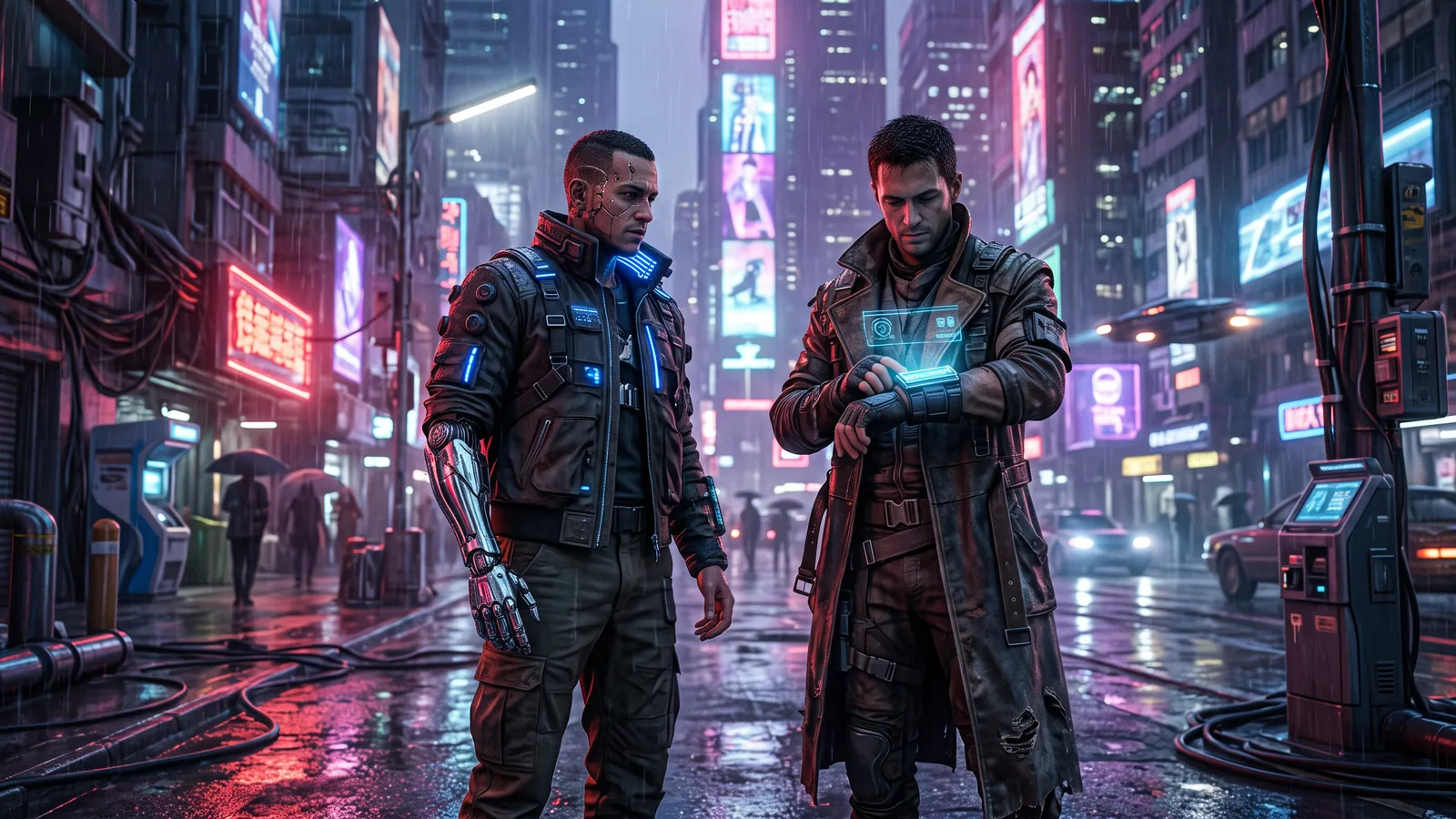
The cyberpunk aesthetic has become one of the most demanding contexts in character and environment 3D modeling. Games like Cyberpunk 2077 set a visual reference standard that makes lower-quality assets immediately legible as subpar. Film and streaming productions have similar reference points. The gap between what viewers expect from the aesthetic and what most stock cyberpunk models deliver is significant.
This is partly a technical issue and partly a design issue. The cyberpunk look requires specific material combinations, specific lighting conditions, and human figures who look like plausible inhabitants of a specific world — not generic sci-fi characters with neon paint applied.
What the cyberpunk aesthetic actually requires
Material contrast. Cyberpunk design is built on the contrast between worn, organic materials (leather, fabric, skin) and hard, technological materials (chrome, carbon fiber, exposed circuitry). Both need to be rendered correctly. Worn leather needs surface variation that communicates age and use. Chrome needs correct reflections. Neither can be a flat material with a texture applied.
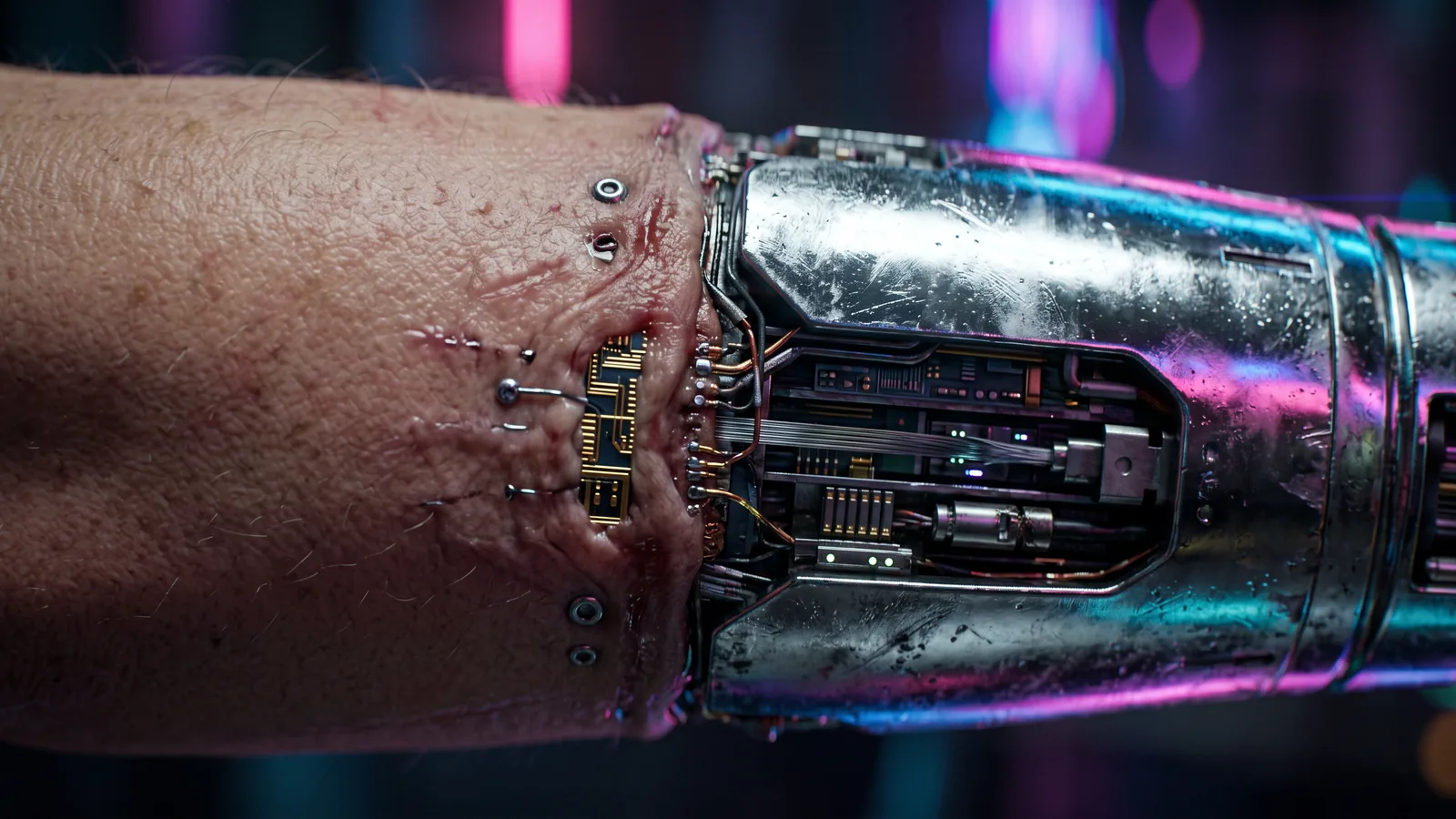
Augmentation integration. Cybernetic augmentations, implants, and mechanical prosthetics must integrate convincingly with the organic body. The boundary between skin and technology — where flesh meets metal — is the most challenging detail to get right. Poor integration reads immediately as a costume accessory, not a body modification.
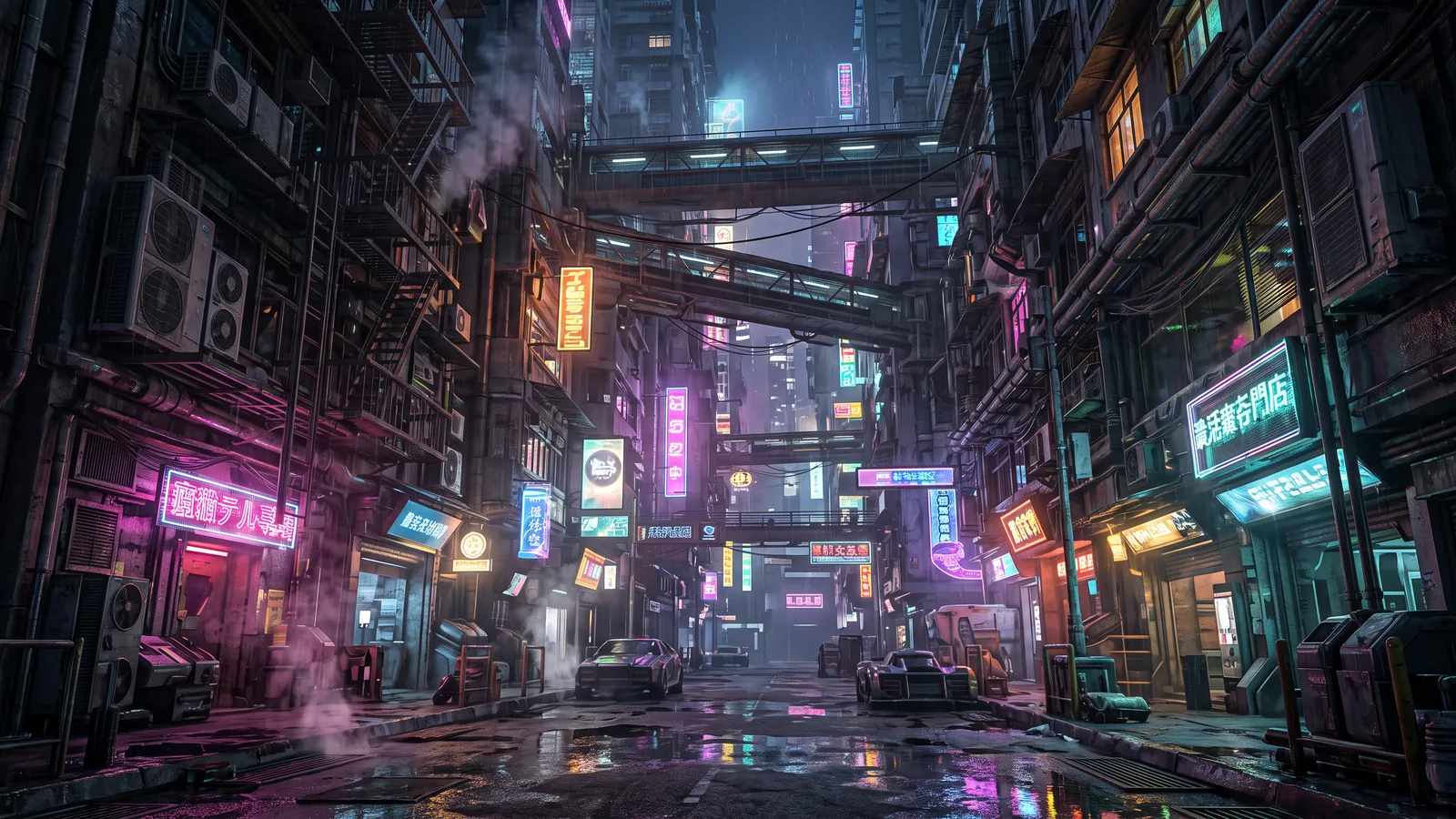
Rain and atmospheric effects. The cyberpunk aesthetic relies heavily on wet surfaces, neon reflections on wet pavement, and atmospheric haze. Figures in a cyberpunk scene need to interact correctly with these environmental conditions. Wet clothing has a different sheen than dry clothing. Skin with rain on it reflects differently from dry skin.
Clothing wear and modification. Cyberpunk clothing is not off-the-shelf fashion — it is modified, repaired, layered, and adapted. Models with clean, unmodified clothing look like they belong in a fashion catalog, not a dystopian city. Surface wear, patches, attachments, and visible wear points communicate the right context.
Human figures in cyberpunk scenes
Cyberpunk scenes use human figures in several capacities: as player characters, as crowd elements in city environments, as NPCs, and as population density indicators in speculative architectural visualization.
Player characters. Main characters in cyberpunk games require the highest detail level: 50,000–150,000 triangle meshes, full PBR material sets including subsurface skin data, and rigs that support both combat animation and social interaction motion. The character’s augmentation design is part of the narrative and needs to be consistent across poses and animation states.
Crowd figures. A cyberpunk city environment populated with crowd figures needs variety: different augmentation levels, different economic classes signaled through clothing quality, different ethnic and body type representation. A crowd of identical figures with different texture maps does not read as a city — it reads as a copy-paste.
Background population. Distant figures in city renders need low polygon counts but correct cyberpunk silhouettes: specific clothing profiles, visible technology, appropriate posture for the environment.
Speculative architectural visualization
Cyberpunk aesthetics appear in speculative and near-future architectural visualization: urban densification concepts, corporate campus renders, infrastructure visualizations for tech clients. These uses require figures that communicate the right cultural context for a near-future world.
For this application, the figures need to be plausible near-future inhabitants rather than genre-coded characters. Subtle technology integration, modified clothing, and functional (not decorative) augmentations read more convincingly than full cyberpunk stereotyping in a space that is meant to feel achievable rather than dystopian.
Photogrammetry in cyberpunk assets
Photogrammetry serves a specific role in cyberpunk character production: it provides the organic baseline that cyberpunk design contrasts against.
A scanned human body provides the skin texture, body proportion, and surface detail that makes augmentations read as modifications to a real person rather than add-ons to a generic mannequin. The implant and augmentation geometry is built on top of the scanned base, which grounds the technology in a believable organic context.
Clothing in cyberpunk design is often custom-built or heavily modified. Photogrammetry of real garments (tactical wear, modified jackets, layered protective clothing) provides surface detail — seams, wear patterns, material compression — that is very difficult to match by hand.
Material requirements
Layered PBR sets. Each major material in a cyberpunk character — skin, fabric, leather, chrome, carbon fiber, circuit board — needs a full PBR set: albedo, normal, roughness, metallic, ambient occlusion, and optionally emissive for illuminated elements.
Emissive elements. Cyberpunk design frequently incorporates glowing elements: LED implants, illuminated clothing elements, powered device indicators. The emissive material needs to interact correctly with HDR rendering — emissive elements should contribute to scene illumination and appear correctly in reflections.
Layered roughness variation. The worn material contrast that defines the aesthetic requires roughness variation at a detailed level. Chrome should be specular with scratches that increase local roughness. Leather should have high roughness except at creases where it has been polished by wear.
The Renderbot cyberpunk collection includes human figures with cyberpunk styling and photogrammetry-based skin and clothing textures for game development and VFX production.
Comments
No comments yet.