


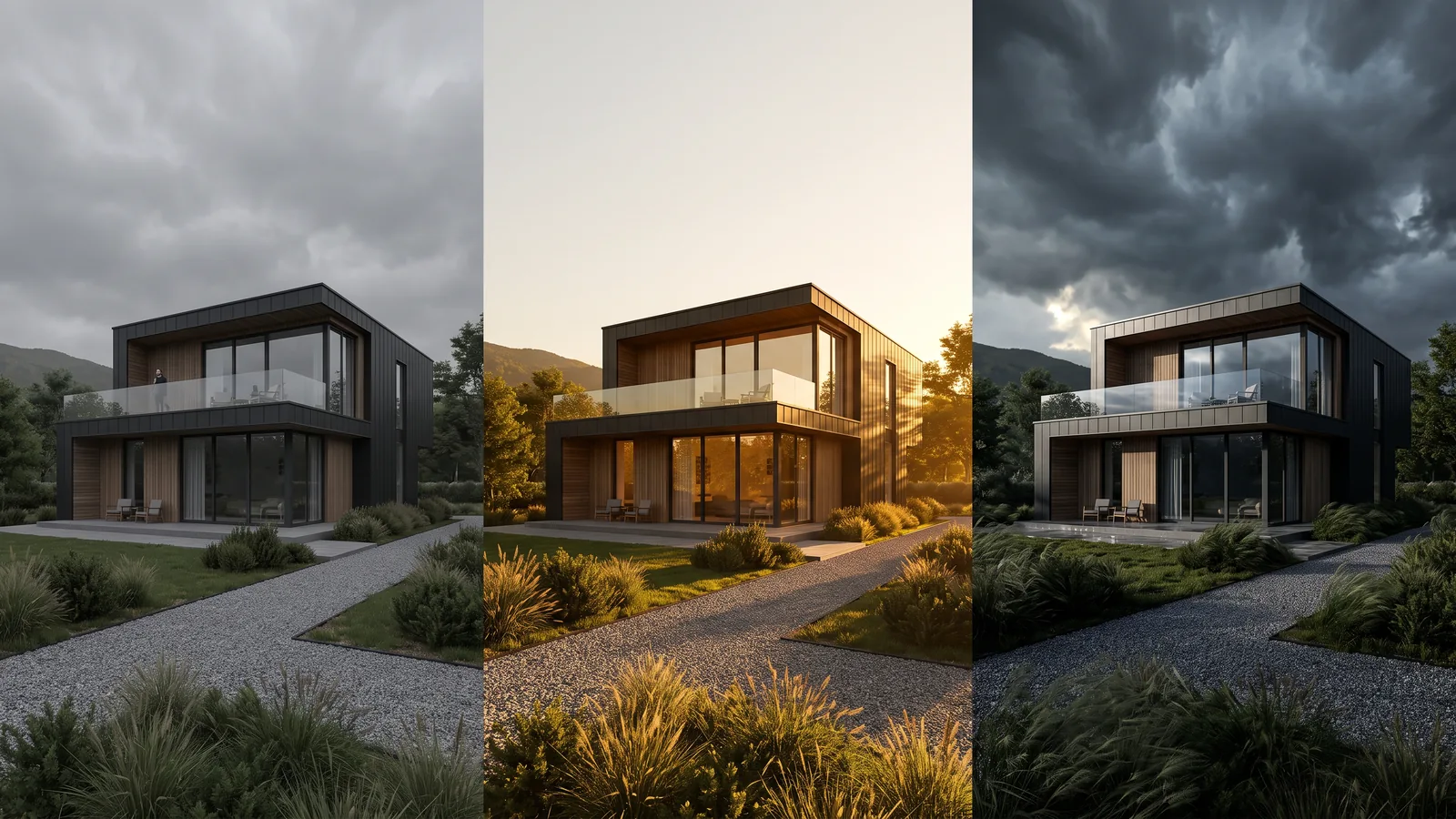
An HDRI (High Dynamic Range Image) is a 360-degree photograph that serves as both the sky background and the light source in a physically-based render. A good HDRI contains accurate lighting data from a real environment — the sun at the correct intensity, the sky at the correct color temperature, the bounce light from the ground.
A bad HDRI looks like a sky but does not contain enough range or resolution to light a scene correctly. Here are the libraries worth knowing.
Poly Haven (polyhaven.com)
Free, CC0 license, no attribution required. The best free HDRI library available. Poly Haven provides HDRIs at up to 8K resolution with accurate exposure data. The collection covers multiple cloud conditions, times of day, and outdoor and interior environments. For most arch viz work, Poly Haven covers the majority of lighting scenarios you will encounter.
ambientCG (ambientcg.com)
Free, CC0. Primarily known for PBR materials, but ambientCG also provides a growing HDRI collection. Useful for cases where you need a specific environment not covered by Poly Haven.
What makes a good HDRI
Dynamic range. A good HDRI has genuine high dynamic range — the sun at thousands of times the intensity of the sky, with correctly exposed shadow areas.
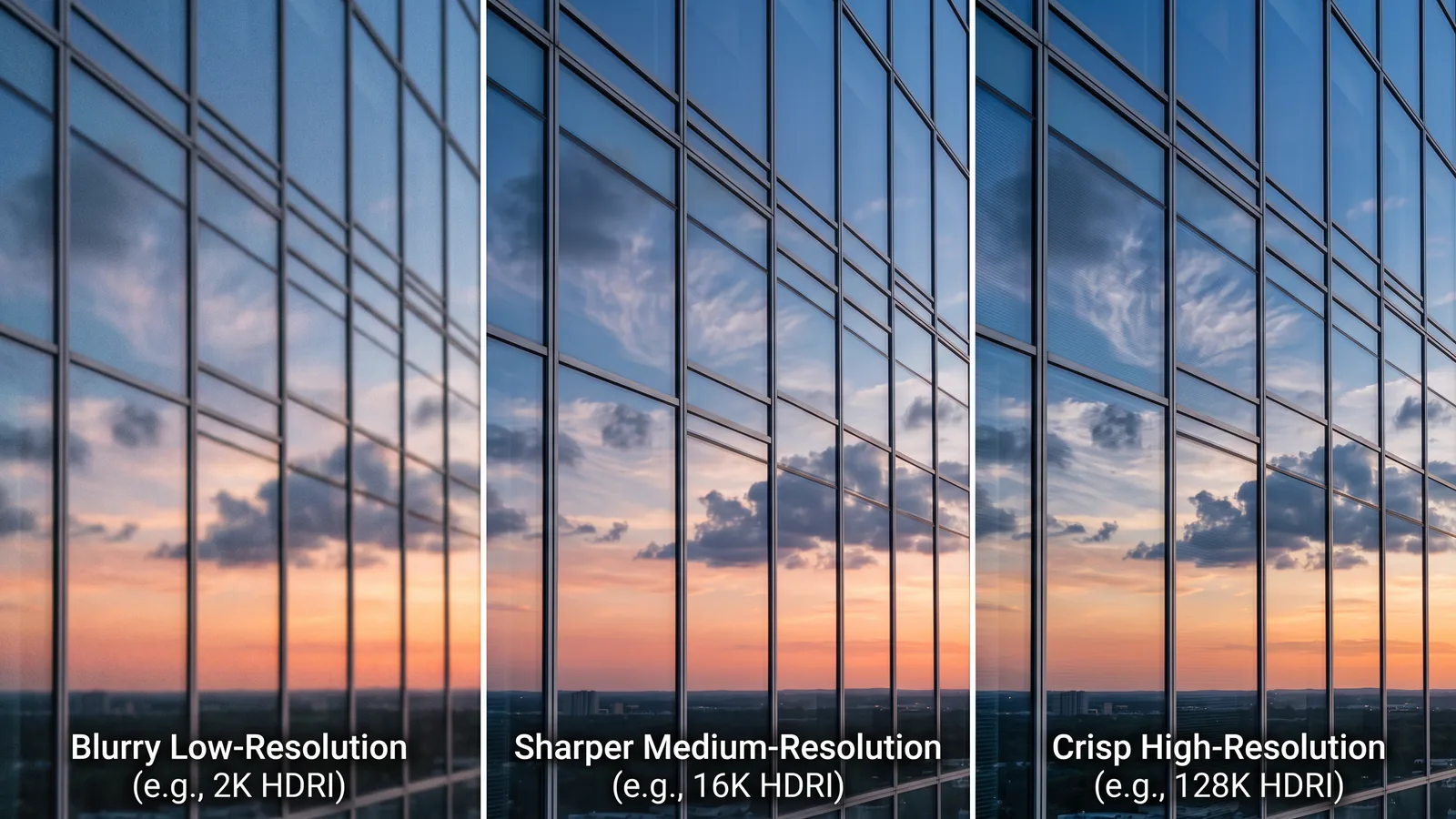
Resolution. For exterior renders with visible sky: 4K minimum, 8K preferred. The sky appears in backgrounds, reflections on glass, and pool reflections. At 1K it is visibly pixelated.
Sun sharpness. A physically accurate sun creates sharp shadows. Many free HDRIs have soft, overexposed suns that produce soft shadows where there should be hard ones.
Which resolution to use
- Exterior renders, sky visible: 8K
- Exterior renders, sky replaced in post: 2K-4K
- Interior renders, small windows: 2K-4K
- Real-time (Unreal Engine): 2K-4K depending on VRAM budget
For the figures that populate your HDRI-lit scenes, see the RenderBOT library of human figures and exterior poses.
Comments
No comments yet.