



For most of its history, arch viz sold architecture. The renders showed spaces: rooms, materials, light. People were absent or awkwardly peripheral. That changed gradually and then quickly. By 2026, renders without convincing people are considered a step below market standard for luxury residential.
Why human figures matter in real estate marketing
Real estate buyers are not primarily evaluating architecture. They are imagining whether they could live there. When a buyer looks at a render, the architecture provides the container. The question the buyer is actually answering is: “Could this be my life?”
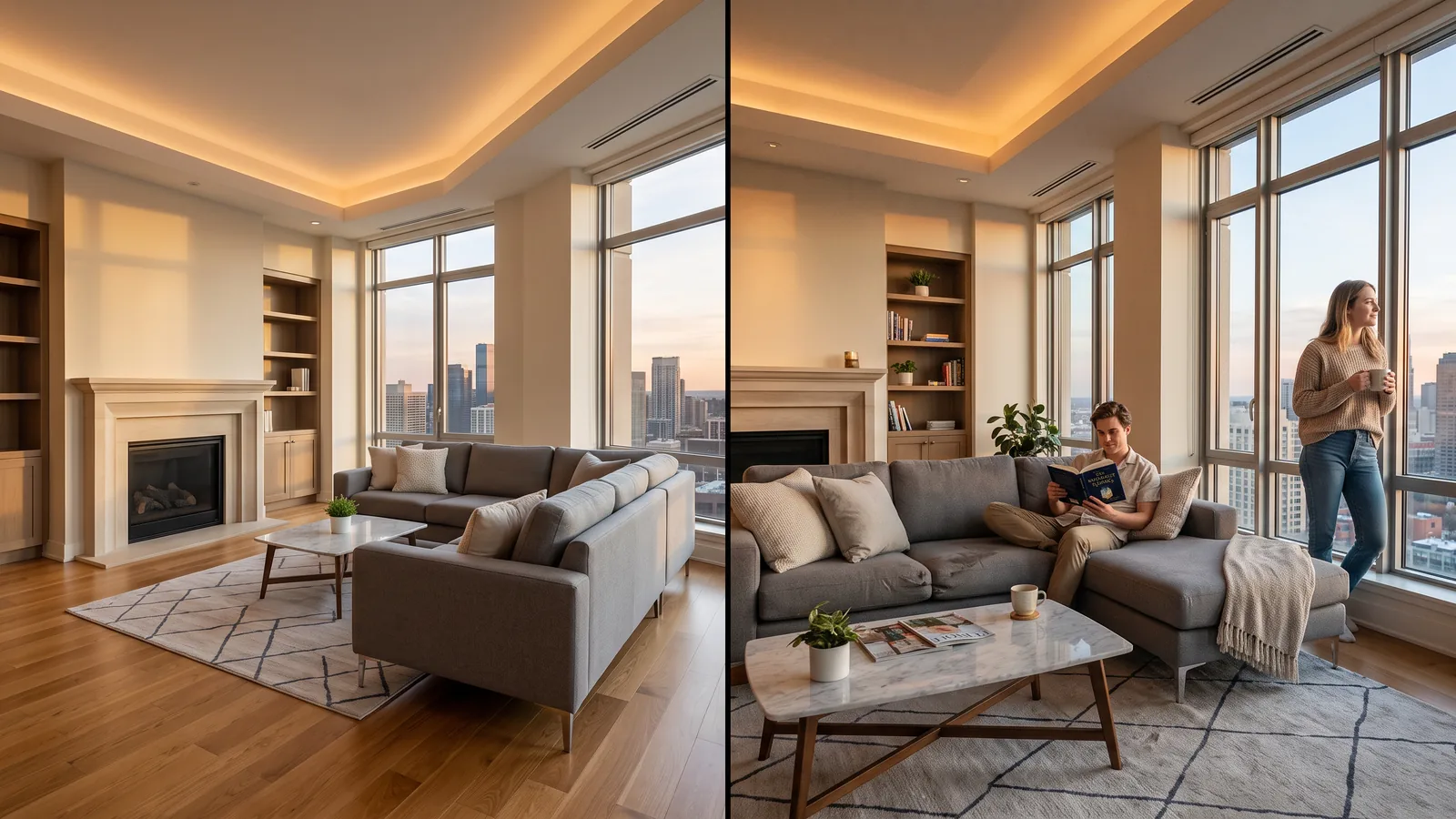
An empty render says nothing about whether a life could happen in this space. A render with a person sitting reading near a window says: someone is comfortable here.
What still goes wrong
- Figures that face the camera — real people do not stand facing cameras
- Homogeneous demographics — renders showing only one demographic profile
- Scale errors — a figure too tall for the door undermines the render credibility
- Wrong lifestyle for the product — mismatched clothing and setting
- Figures doing nothing — standing in a room with no visible activity
The figures that work best
For still renders in real estate marketing, the most effective figures are engaged with the space, oriented away from or at an angle to the camera, wear clothing appropriate to the lifestyle the development is selling, and appear in groups of 1-2 for interior shots.
Browse the RenderBOT library for human figures in interior and exterior poses, across a range of family and professional demographics.
Browse related 3D models: 3D People Models · Human 3D Models · Interior People
Comments
No comments yet.