


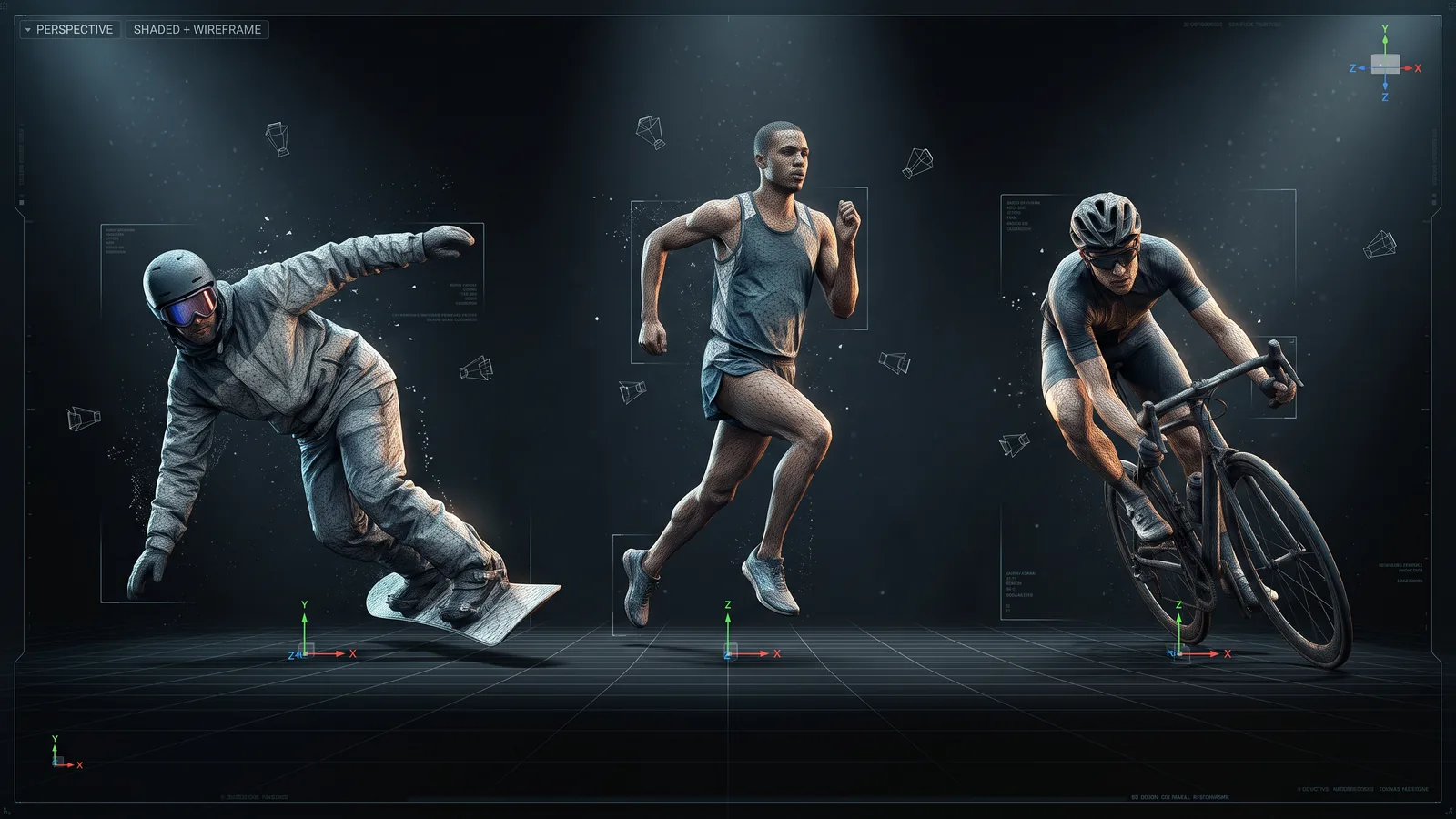
Sport 3D models cover a range of production contexts. Games use them as crowd assets, gameplay characters, and spectator figures. Sports facility arch viz uses them to populate stadiums, gyms, ski slopes, and running tracks. Broadcasting uses them for pre-match graphics and player overlays. Training apps use them for movement analysis and technique demonstration.
Each context has different requirements. A crowd figure for a stadium render needs a small polygon count and a convincing silhouette at 30 meters. A technique demonstration figure for a coaching app needs correct joint placement and accurate movement range. Getting the asset that fits your use case requires knowing what those differences are.
Sport-specific pose and equipment requirements
The defining quality of a sport model is not the base figure — it is the pose and equipment. A generic standing figure in a skiing jacket is not a skiing model. It is a figure in a jacket.
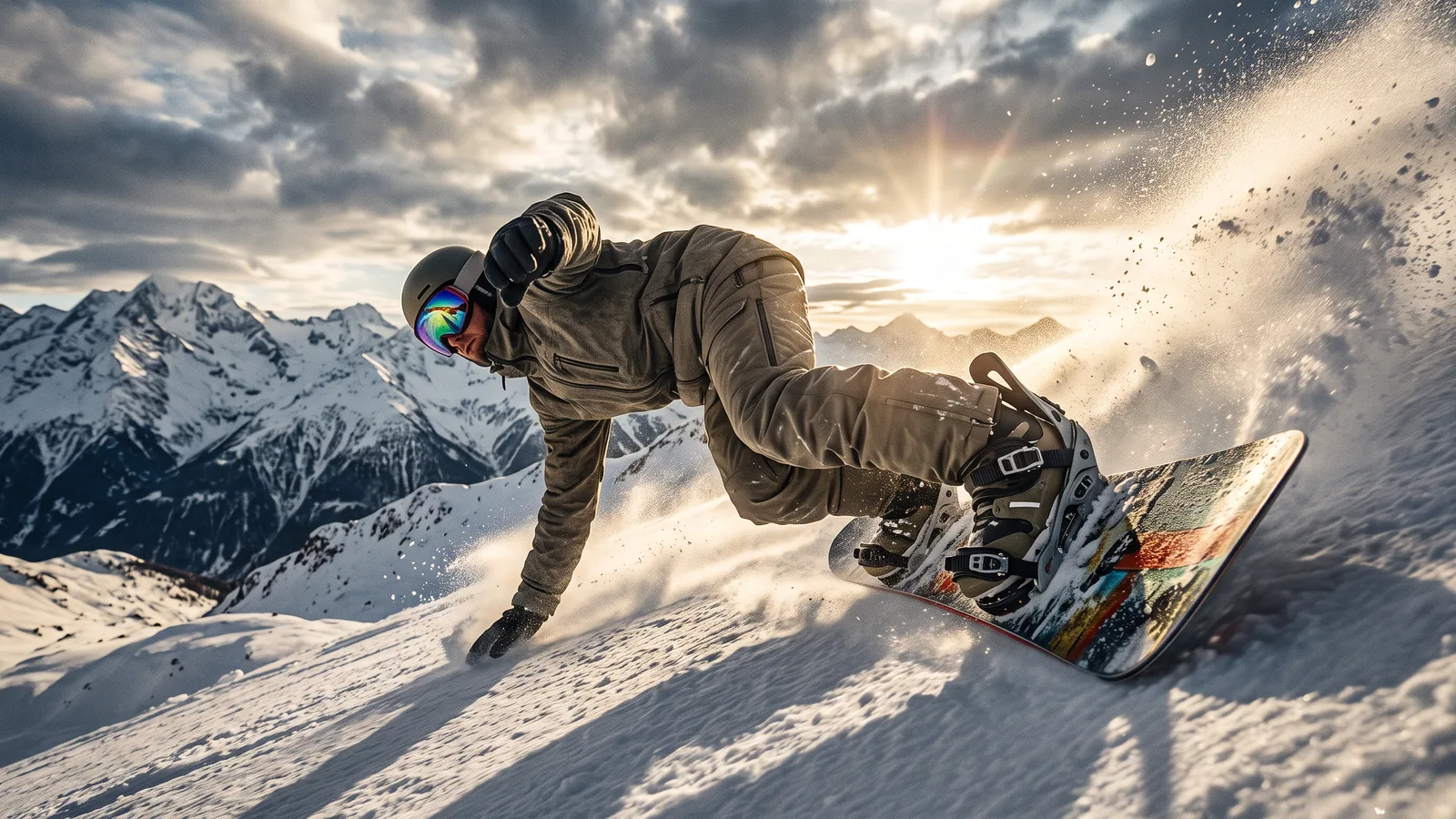
Pose authenticity. Sport-specific poses require understanding of the biomechanics of the sport. A snowboarder in a carved turn has a specific weight distribution, hip angle, and arm position that is distinct from a person standing on a board. A runner at stride has a specific leg extension and arm drive that differs from a walking figure. Incorrect poses are immediately legible to anyone familiar with the sport.
Equipment geometry. Ski bindings, snowboard bindings, bicycle frames, running shoes, helmets, and sport-specific accessories require geometric accuracy to read correctly in close renders. Equipment that is approximated or stylized at a distance that reveals its geometry breaks the render.
Clothing deformation. Sport clothing behaves differently from street clothing because it is form-fitting and subject to specific strain patterns. A cyclist’s jersey pulls at the shoulder when leaning. A snowboarder’s jacket bunches at the waist in a low crouch. These deformations are captured by photogrammetry of real athletes in real equipment and cannot be convincingly approximated by modeling the clothing in a neutral pose.
Use case: sports facility arch viz
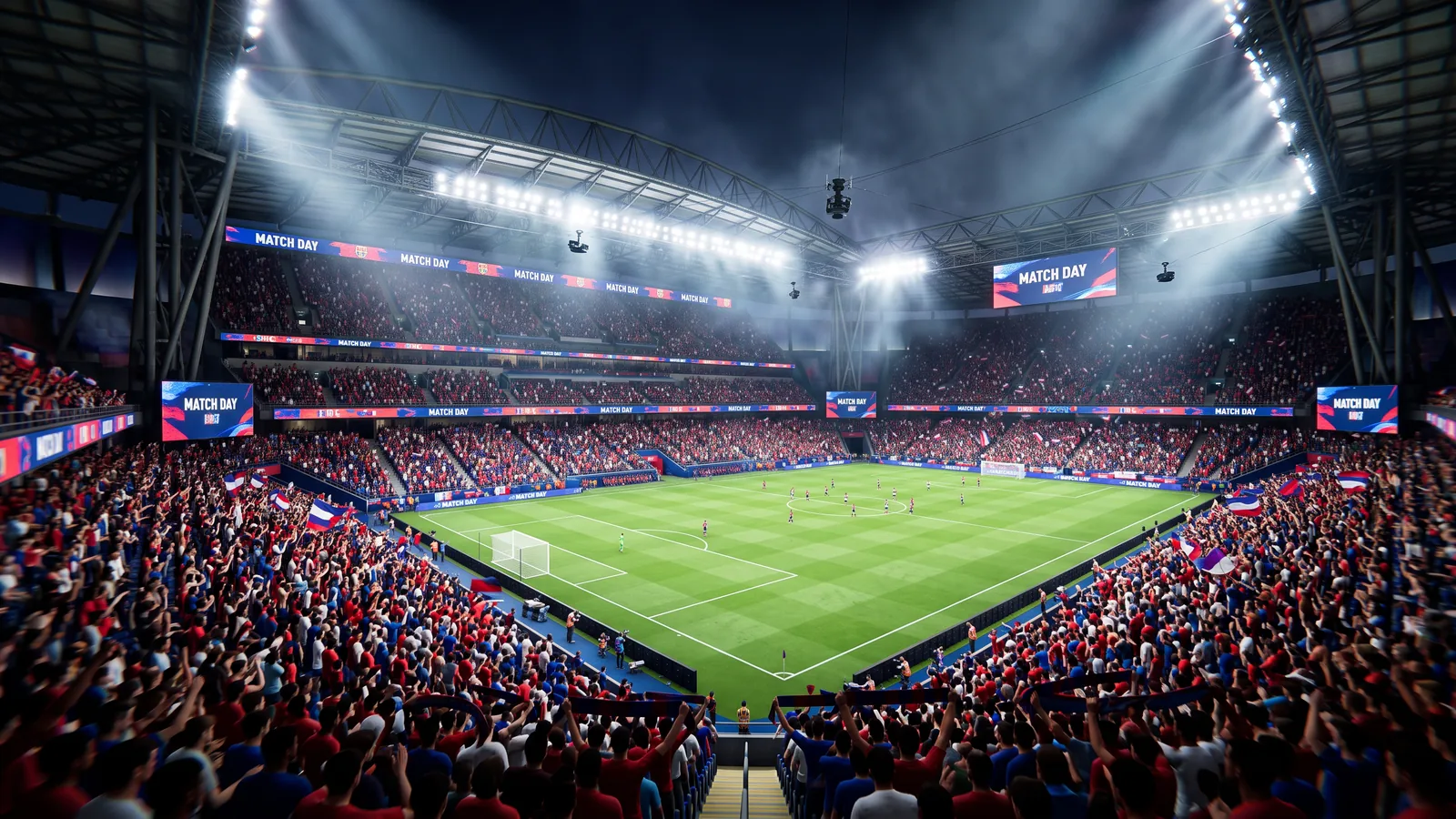
Sports facilities — gyms, swimming pools, ski resorts, stadiums, running tracks, tennis courts — are a significant segment of arch viz work. These renders require sport-appropriate human figures to communicate the intended use of the space.
Scale and proportion. A gym render with figures who are the wrong scale relative to equipment undermines the render. Standard bench heights, bar heights, and equipment dimensions are fixed. Human figures must be dimensionally consistent with these fixtures.
Activity diversity. A gym render with 10 figures in identical poses reads as synthetic regardless of render quality. A convincing render requires diversity in activity: some figures lifting, some resting, some at cardio equipment, some stretching.
Clothing and equipment consistency. The figures in a sports facility render should wear clothing appropriate to the sport and consistent with the facility’s demographic. A luxury gym and a public sports center have different typical clothing registers.
Lighting response. Sport environments often use high-intensity directional lighting — stadium floodlights, overhead gym fluorescents, ski slope sunlight. Figures must have correct subsurface scattering responses to these lighting conditions.
Use case: game development
Games use sport models in several contexts, each with different requirements.
Crowd systems. Stadium games, sports management games, and event-based games use crowd systems that place hundreds or thousands of figures in a scene. These assets need very low polygon counts — typically under 1,000 triangles — with imposter rendering for distance. The figure needs a correct silhouette, not surface detail.
Gameplay characters. A player character or main NPC needs a high-resolution mesh with a game-ready rig. Polygon counts of 15,000–50,000 triangles are typical. The rig needs to support the sport’s range of motion without topology artifacts.
Portrait and close-up renders. Sports games increasingly use scanned faces and bodies for close-up rendering in character creation screens, cutscenes, and UI elements. These require high-resolution texture data and accurate facial geometry.
Sport categories and coverage
Sport 3D model libraries vary significantly in the breadth of sports they cover. The most common categories are:
Winter sports. Skiers, snowboarders, and cross-country figures in season-appropriate clothing and equipment. These are among the more technically demanding to scan because the equipment is complex and the poses require specific balance positions.
Running and fitness. Runners in stride, walkers, cyclists, and gym figures. High demand from arch viz and app development. Good libraries cover a range of paces and clothing styles.
Ball sports. Football, basketball, tennis, and golf figures in sport-specific poses. Demand from game development and sports facility renders.
Water sports. Swimmers, surfers, and kayakers. Technically difficult to scan because wet clothing and water interaction require controlled scan environments.
Martial arts and combat sports. Boxers, fighters, and martial arts practitioners. Used in games and training visualization.
Format requirements by use case
The same sport model may need to be used in different pipelines.
OBJ/FBX for still renders. Arch viz and static visualization work uses standard mesh formats. No rigging required.
FBX with rig for animation. Any animated use — walkthroughs, games, training apps — requires a rigged FBX with the sport-appropriate skeleton.
GLTF for real-time. Unreal Engine and Unity projects prefer GLTF or the engine’s native format. Polygon counts need to be appropriate to the real-time rendering target.
STL for 3D printing. Trophy fabrication, sports product design, and physical models require watertight STL geometry.
The Renderbot sport library includes scanned athletes in sport-specific poses across skiing, snowboarding, running, fitness, and other categories.
Comments
No comments yet.