



WebGPU shipped in Chrome and Edge in 2023. Firefox followed in 2024. By 2026, the API is stable, adoption has grown, and the first production-quality architectural visualization tools built on it have shipped.
What WebGPU actually enables
WebGPU supports compute shaders, indirect drawing, and GPU memory access patterns that match what Vulkan, Metal, and DirectX 12 provide. This is what allows real-time path tracing, deferred rendering, and other modern techniques to work in a browser.
What is actually running in browsers in 2026
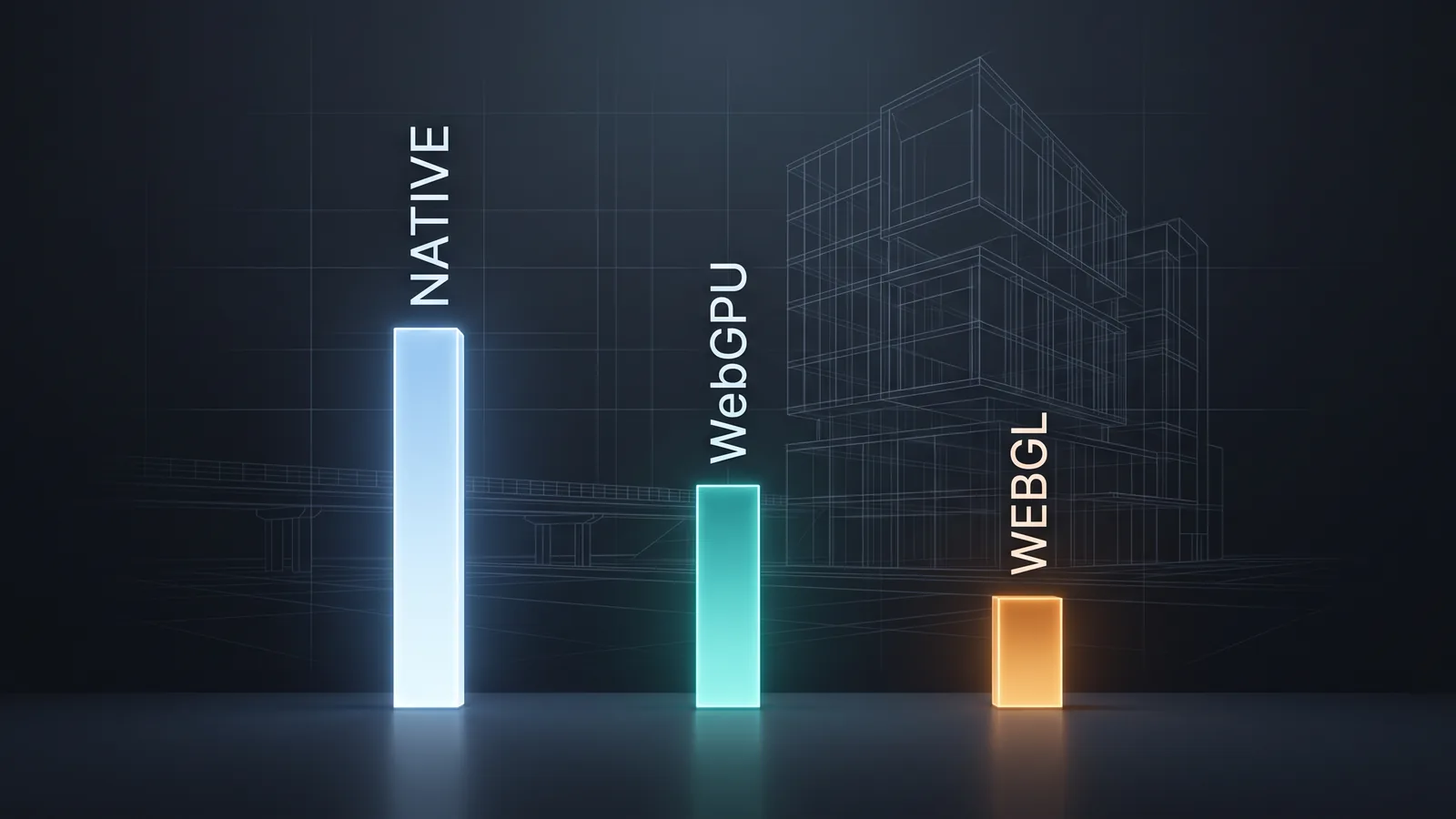
- Babylon.js with WebGPU backend: typically 2-4x faster than its WebGL backend for complex scenes
- Three.js WebGPU renderer (WebGPURenderer): shipped as production-ready in 2025
- Unreal Engine HTML5 target: uses WebGPU as its graphics backend
What it means for arch viz delivery
The practical question: can you deliver a real-time walkthrough in a browser in 2026 that is good enough for client presentations? The honest answer: yes, for projects designed to run in a browser from the start.
Scene complexity: A scene built for native Unreal will not run at acceptable framerates in a browser WebGPU target without significant optimization. Human figures: Complex scanned figures need LOD optimization for browser delivery. Features: Lumen global illumination does not run in the browser Unreal target.
The browser as a delivery format
The practical argument for browser-based real-time visualization is accessibility. A client who can click a link and walk through a space in their browser, without installing software, is a different kind of client presentation. For real estate developers who want to give buyers self-service access to walkthrough experiences, browser delivery via WebGPU is now viable.
For human figures optimized for real-time use, the RenderBOT library provides scanned figures in formats compatible with Unreal Engine’s HTML5 target and Three.js pipelines.
Comments
No comments yet.